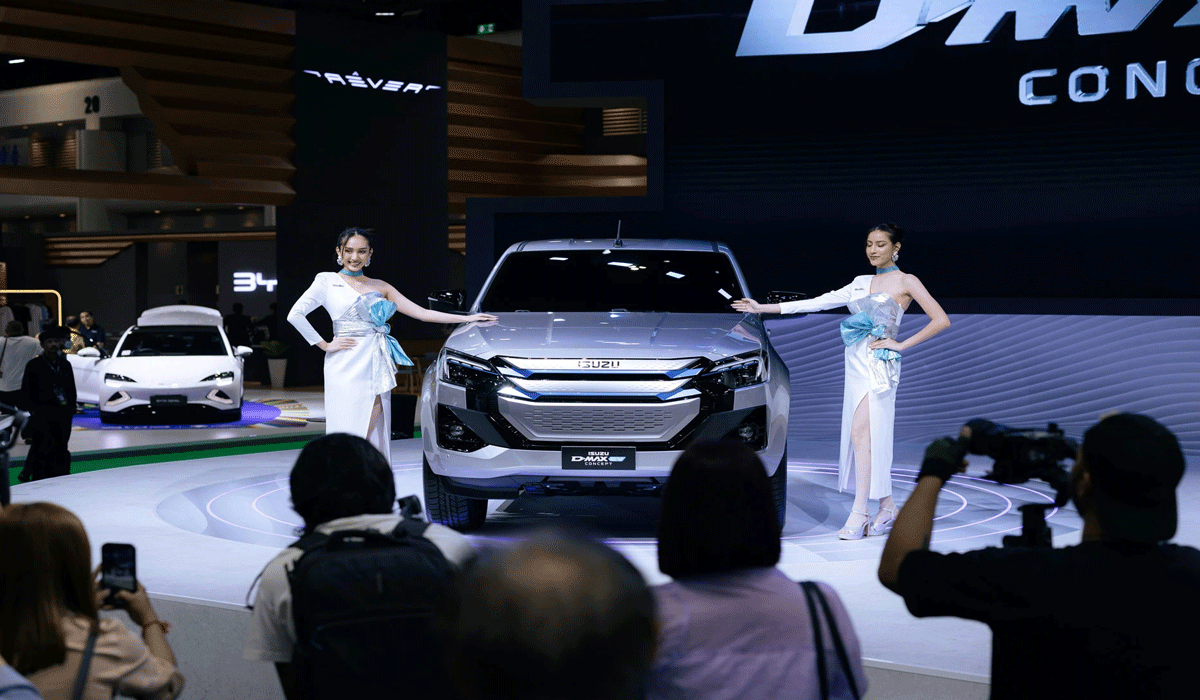
The Future of Mobility Innovations Unveiled at the Motor Show
The modern motor show has evolved into more than just a display of new cars; it has become a global stage for transformative ideas.
Automakers, tech companies, and innovators gather to showcase advancements that redefine transportation. These exhibitions highlight how mobility is shifting toward sustainability, intelligence, and connectivity, offering a glimpse into a future that is rapidly approaching The Green Motorist.
Electric Vehicles Leading the Charge
Electric vehicles have become the centerpiece of nearly every motor show, reflecting the industry’s commitment to reducing emissions. Manufacturers are introducing models with extended driving ranges, faster charging systems, and improved affordability. These developments aim to make electric mobility accessible to a broader audience worldwide.
Battery technology is advancing at a remarkable pace, with solid-state batteries emerging as a promising breakthrough. These batteries offer higher energy density, improved safety, and shorter charging times compared to conventional lithium-ion systems. As a result, electric vehicles are becoming more practical for daily use.
In addition, governments and companies are investing heavily in charging infrastructure. Fast-charging stations are expanding in urban and rural areas, making long-distance travel more convenient. This ecosystem development ensures that electric vehicles are not just innovative but also practical for widespread adoption.
Autonomous Driving Technologies
Autonomous driving is another major highlight at motor shows, capturing global attention. Self-driving systems are designed to improve safety and efficiency by minimizing human error. Vehicles equipped with advanced sensors and artificial intelligence can detect surroundings and respond instantly to changing road conditions.
Many cars now feature semi-autonomous capabilities such as lane-keeping assistance, adaptive cruise control, and automated parking. These technologies enhance driver comfort while gradually preparing users for fully autonomous systems. The transition is happening step by step.
Despite the progress, challenges remain in achieving full autonomy. Regulatory frameworks, safety validation, and public trust are still evolving. However, motor shows demonstrate that the industry is steadily moving toward a future where autonomous vehicles play a significant role in everyday transportation.
Read Also: High-Performance Zero-Emission Electric Sports Car
Connectivity and Smart Features
Modern vehicles are increasingly connected, transforming them into intelligent machines. At motor shows, manufacturers present cars that integrate seamlessly with smartphones, smart homes, and digital ecosystems. This connectivity enhances convenience and provides a more personalized driving experience.
Real-time navigation, voice-controlled systems, and over-the-air software updates are becoming standard features. These technologies allow vehicles to improve continuously without requiring physical upgrades. Drivers benefit from enhanced functionality and improved safety.
Vehicle-to-vehicle and vehicle-to-infrastructure communication are also gaining attention. These systems enable cars to share information about traffic, road conditions, and potential hazards. Such innovations contribute to smoother traffic flow and reduced accident risks.
Sustainable Materials and Design
Sustainability is not limited to electric powertrains; it also extends to vehicle design and materials. Automakers are showcasing interiors made from recycled, biodegradable, and eco-friendly materials. This approach reduces environmental impact while maintaining high-quality standards.
Lightweight construction is another focus area, as it improves efficiency and performance. Materials such as carbon fiber and advanced composites help reduce vehicle weight, leading to lower energy consumption. These innovations are essential for both electric and traditional vehicles.
Design trends are also shifting toward minimalism and functionality. Interiors are becoming more spacious and adaptable, especially in autonomous vehicles. This transformation reflects a new vision of cars as living spaces rather than just transportation tools.
Shared Mobility and Urban Solutions
Motor shows are increasingly highlighting alternatives to private car ownership. Shared mobility solutions, such as ride-sharing and car-sharing, are gaining popularity in urban areas. These concepts aim to reduce congestion and optimize resource usage.
Urban mobility solutions also include compact electric vehicles and micro-mobility options. Electric scooters, bikes, and small city cars are being introduced to address short-distance travel needs. These innovations make transportation more flexible and efficient.
The focus on integrated mobility systems is growing. By combining different modes of transport, cities can create seamless travel experiences. Motor shows demonstrate how these solutions can reshape urban living and improve accessibility.
The Role of Artificial Intelligence
Artificial intelligence is playing a crucial role in shaping the future of mobility. AI systems analyze vast amounts of data to improve vehicle performance, safety, and user experience. At motor shows, AI-driven innovations are presented as key components of next-generation vehicles.
Driver assistance systems rely heavily on AI to interpret real-time data from sensors and cameras. These systems can predict potential hazards and take preventive actions. This capability significantly enhances road safety and reduces accident rates.
AI is also transforming in-car experiences. Personalized settings, intelligent voice assistants, and predictive maintenance are becoming common features. These advancements make vehicles more intuitive and responsive to individual needs.
Conclusion
The innovations unveiled at motor shows clearly indicate a shift toward smarter, cleaner, and more connected mobility. From electric vehicles to artificial intelligence, each advancement contributes to a more efficient transportation ecosystem. These developments are shaping how people travel and interact with vehicles.
As technology continues to evolve, the future of mobility will become increasingly integrated into daily life. Motor shows will remain a vital platform for showcasing progress, inspiring innovation, and driving the transformation of global transportation systems toward sustainability and intelligence.
Image Information:
The first image of wheels.com
The second image of www.techradar.com